In brief
Drogheda is a Co. Louth town about 41 km from Dublin city centre. Open datasets list 37 Fáilte Ireland visitor attractions within 10 km, four national monuments open to visitors within 20 km, six nationally rated heritage buildings in the town, one waymarked walking trail starting nearby.
Drogheda at a glance
- Typical sale price
- €390,000 median, 819 sales, the 12 months to 23 October 2026
- Average rent
- €1,462 a month, Q4 2025
- Nearest rail station
- Belfast, Drogheda/Dundalk, Rosslare lines, 1.2 km away (straight line)
- Planning
- 145 grants in the last 12 months
Drogheda sits on the River Boyne about 50km north of Dublin, which makes it one of the easiest day trips in Leinster and a good base for a weekend in the Boyne Valley. The short version: come for a barbican gate that has stood since the 1200s, a preserved saint’s head you can actually go and see, and a 1690 battlefield ten minutes out the road.
It is a working Louth town, not a polished heritage village, and that is part of the appeal. Below are the places worth your time, what they cost, and how to string a day together.
What are the must-see things to do in Drogheda?
St Laurence’s Gate
This is the first thing most people photograph and rightly so. St Laurence’s Gate is a 13th-century barbican, a fortified gatehouse with two tall drum towers, and one of very few of its kind left standing in Ireland. It once guarded the eastern entrance through the town walls.
It is free, always accessible, and sits right on the street, so you can walk through it on your way into town. Pair it with a wander down Laurence Street toward the river.
Highlanes Gallery
A former Franciscan friary on Laurence Street, now Drogheda’s municipal art gallery. It holds the Drogheda Municipal Art Collection and runs a rolling programme of contemporary exhibitions, so there is usually something new in.
Admission is free, with a suggested token donation of around €2. Open Monday to Saturday, roughly 10:30am to 5pm, closed Sundays except for festival weekends. A handy free stop on a wet afternoon.
St Peter’s Church and the shrine of St Oliver Plunkett
The big draw here is unusual: the preserved head of St Oliver Plunkett, the last Catholic martyr executed in England, displayed in a gilded shrine inside this West Street church. He was canonised in 1975, and pilgrims still come.
Entry is free with donations welcome, and the church is generally open through the day. It takes ten minutes to see and you will not forget it.
Millmount Museum and Martello Tower
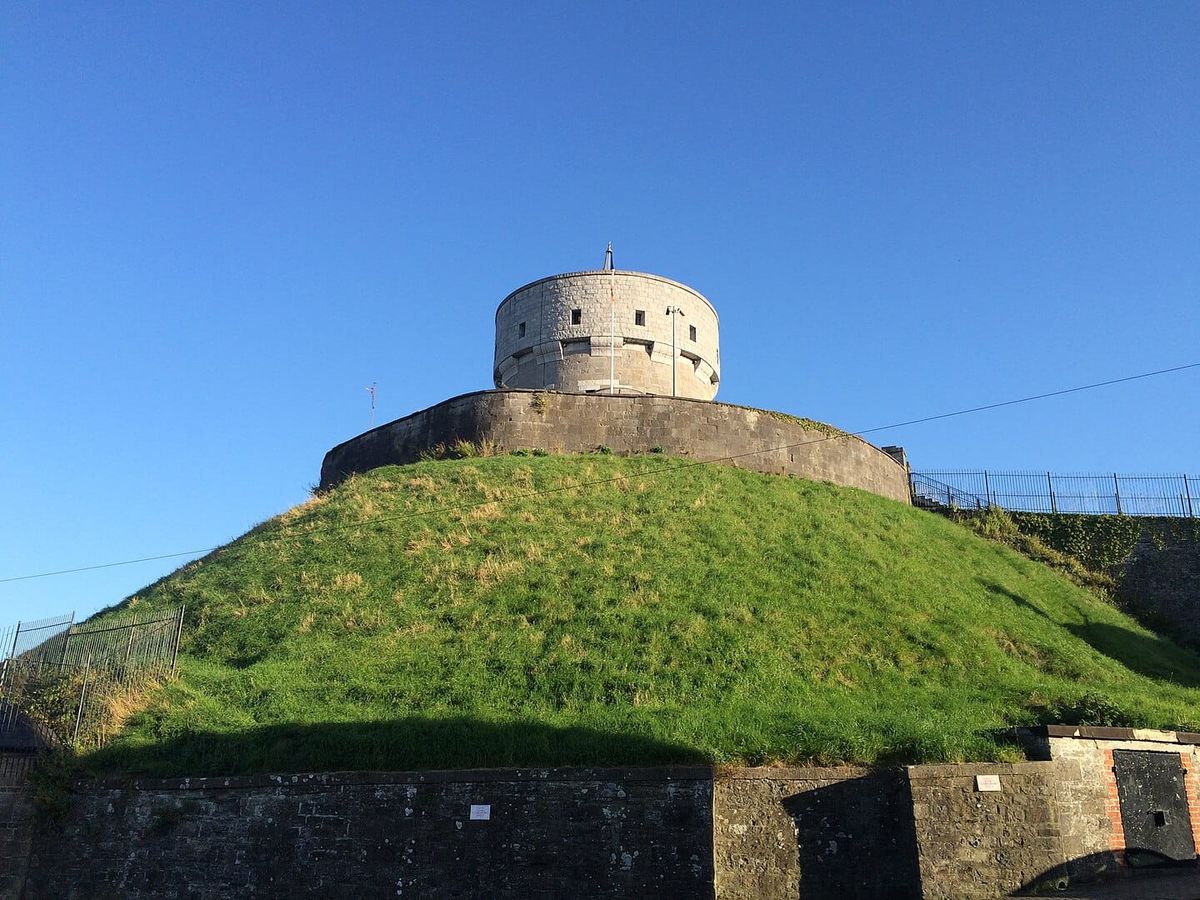
Up on the high ground across the river, the Millmount complex gives you the best view in Drogheda. Climb to the Martello tower (locally nicknamed “the cup and saucer”) for a full sweep over the town and the Boyne, then take in the local-history museum below.
There is a small admission for the museum and tower. Check current hours before you go, as they shift with the season.
Droichead Arts Centre
On Stockwell Street, this is the town’s main venue for theatre, music, comedy and visiting exhibitions. Worth a look at the listings if you want an evening with your day, especially around festival season. Programme and prices vary, so check what is on before you set off.
What are the quieter corners worth finding?
Magdalene Tower
Tucked above the town centre, the Magdalene Tower is the surviving belfry of a 13th-century Dominican friary. It is a quiet, free spot most day-trippers walk past, and it carries a heavy piece of history: this is where, by tradition, several Irish chiefs submitted to Richard II in 1395. Five minutes uphill, no ticket, good for a photo and a breather.
The medieval walls and laneways
Drogheda kept more of its medieval bones than most Irish towns its size. Beyond St Laurence’s Gate, you can still trace surviving stretches of the old town wall and wander the narrow lanes climbing away from the river. It rewards an unhurried hour on foot rather than a checklist.
Where can you walk in and around Drogheda?
The Boyne ramparts and Greenway
For a flat, easy riverside walk, follow the old ramparts path along the Boyne. It links up with the wider Boyne Greenway, a traffic-free route that runs west toward the Battle of the Boyne site and the heart of the valley. Good for a buggy, a bike, or just blowing off a long lunch.
Beaulieu House and Gardens
A few minutes east of town, Beaulieu is a rare unfortified 17th-century house with walled Edwardian gardens. The gardens open seasonally and the house runs by guided tour on set dates, so this one needs checking ahead. Lovely on a dry day if the timing lines up.
What is there for families near Drogheda?
Battle of the Boyne Visitor Centre, Oldbridge
Ten minutes upriver, the 1690 battlefield where William of Orange beat James II is now a free-to-roam estate around Oldbridge House. The visitor centre brings the battle to life with a laser map, weapon demonstrations on event days, and walled gardens to wander.
Admission to the centre is modest (around €5 for adults, run by the OPW), and the parklands are free. A genuinely good half-day for kids who like a bit of history with their running-around.
Funtasia Waterpark
If the weather turns, Funtasia on the Donore Road has slides, a wave pool and an indoor play frame, plus arcade games. It is a reliable wet-day fallback for younger families. Check the website for session times and family tickets, as it gets busy at weekends and during school holidays.
Where should you eat and drink in Drogheda?
For coffee, Ariosa on Lawrence Street roasts its own beans and is the local benchmark for a flat white, open daily from early. Over at the Bryanstown Centre on the Dublin Road, the Brown Hound Bakery turns out proper sourdough, pastries and lunch, and is a long-standing favourite for a sit-down.
The town has a solid run of traditional pubs along the main streets for a pint and a bit of music at the weekend. As ever in a working town, openings change, so a quick check before a special trip never hurts.
How do you make a day of it in the Boyne Valley?
Drogheda is the gateway to the wider Boyne Valley, so it pairs naturally with the bigger draws nearby. Newgrange and the Brú na Bóinne tombs, the Hill of Tara and Trim Castle are all within a short drive, mostly across the river in Meath.
If you would rather not drive, a guided day tour out of Dublin is the simplest way to hit the headline sites in one go.
Our pick for a smaller group:
Dublin to Newgrange and Monasterboice Small-Group Guided Tour takes in Newgrange and Monasterboice, both right beside Drogheda, in a small group, so you get more from the guide and less of a coach-park crush. From €85.
If you would rather range wider across the valley’s ancient sites:
Celtic Boyne Valley and Ancient Sites Day Tour from Dublin works in the Boyne Valley, the Hill of Tara and the Loughcrew Celtic tombs for a broader sweep of the valley’s prehistory. From €70.
How do you get to Drogheda?
Drogheda is just off the M1 motorway, about 50km and well under an hour from Dublin city, with parking around the town centre and at the bigger attractions. By rail, it is on the main Dublin to Belfast line, so frequent trains from Dublin Connolly reach Drogheda station in roughly 35 to 45 minutes, and the town is walkable from there.
Drogheda quick FAQ
Is Drogheda worth visiting for a day? Yes. You can see St Laurence’s Gate, St Oliver Plunkett’s shrine and the Millmount viewpoint in a morning, then add the Battle of the Boyne site or a Boyne Valley loop in the afternoon.
What is Drogheda famous for? Its medieval town gate, the preserved head of St Oliver Plunkett at St Peter’s, and its position as the gateway to the Boyne Valley and the 1690 Battle of the Boyne.
Is there much to do in Drogheda with kids? The Battle of the Boyne estate at Oldbridge and Funtasia Waterpark cover both a dry and a wet day, and the Boyne Greenway is good for bikes and buggies.
Nearby guides
Drogheda is the largest town in County Louth, so it is worth reading alongside our wider things to do in Louth guide and, just across the Boyne in Meath, our things to do in Navan guide for the rest of the valley.
For official visitor information, see the OPW Battle of the Boyne site and the Highlanes Gallery website before you travel, as hours and admission can change.
This guide contains affiliate links. If you book through them we may earn a small commission, at no extra cost to you.
Where to stay in Drogheda
Making a night of it? Browse hotels, guesthouses and places to stay in Drogheda:
See places to stay in Drogheda on Expedia
Thinking of buying or renting in Drogheda? See Drogheda house prices - median sale price, recent sales and rental yield.
Attractions near Drogheda
Visitor attractions listed by Fáilte Ireland within 10 km (top 12 of 37).
- St Peter’s Roman Catholic Church, situated on West Street in Drogheda Town, is famous for housing the shrine of St Oliver Plunkett. The site’s first church was built…
- Established in 1989, Droichead Arts Centre is a multi disciplinary centre in the heart of Drogheda, County Louth. They provide an extensive curated arts and cultural…
- St Laurence's Gate, in Drogheda County Louth, which led to the Friary of St Laurence, is widely regarded as one of the finest of its kind in Europe.
- Magdalene Tower is all that now remains of the once important Dominican Friary It is the belfry tower of the friary which Lucas de Netterville, then Archbishop of…
- Funtasia Theme Park Drogheda in County Louth, is an adrenalin pumping, heart pounding, head rushing, water spraying experience. Funtasia Theme Park has over 15…
- The Battle of the Boyne Visitor Centre in Oldbridge, County Meath gives an in-depth insight into the battle between King William III and his father-in-law King James…
- The woods form part of 60 acres of rolling parklands surrounding the magnificent Georgian mansion of Townley Hall.
- An Grianán, situated in Termonfeckin, County Louth, is a centre which offers one day, midweek and weekend courses in art, crafts, cookery, leisure, personal…
- Boyne Valley Wools in County Meath, is a handcraft studio shop located in the heart of a working sheep farm. Visitors can listen to the farm animals, perhaps even…
- Bettystown Beach, located in the picturesque east coast of County Meath, offers a delightful escape with its 5km stretch of sandy shoreline. Renowned for its scenic…
- Duleek Abbey began life as a monastic settlement when, in 450 AD, Patrick, the Patron Saint of Ireland, established a bishopric there.
- Seapoint Beach is located less than 2 kilometres from the nearby village of Termonfeckin and 9 kilometres from Drogheda.
Heritage and monuments
National monuments open to visitors within 20 km, plus nationally rated buildings in Drogheda from the National Inventory of Architectural Heritage.
- The first Cistercian monastery in Ireland founded in 1142 by St Malachy of Armagh, its most unusual feature is the octagonal Lavabo c.
- The great passage tomb mound of Newgrange built over 5,000 years ago during the middle of the Neolithic period (around 3200 BC) is one of a number of monuments which, together with the nearby passage tombs of Knowth…
- The great passage tomb cemetery of Knowth, built over 5,000 years ago during the middle of the Neolithic period (around 3200 BC), is one of a number of monuments which, together with the nearby passage tombs of…
- Standing tall and proud on the summit of Skreen Hill, overlooking the more famous Hill of Tara, is the site of an ancient church associated with St Columba.
Walks and nature
Waymarked trails from Sport Ireland's National Trails Register, starting near Drogheda and across Co. Louth.
Frequently asked
Is Drogheda worth visiting for a day?
Yes. You can see St Laurence's Gate, St Oliver Plunkett's shrine and the Millmount viewpoint in a morning, then add the Battle of the Boyne site or a Boyne Valley loop in the afternoon.
What is Drogheda famous for?
Its medieval town gate, the preserved head of St Oliver Plunkett at St Peter's, and its position as the gateway to the Boyne Valley and the 1690 Battle of the Boyne.
Is there much to do in Drogheda with kids?
The Battle of the Boyne estate at Oldbridge and Funtasia Waterpark cover both a dry and a wet day, and the Boyne Greenway is good for bikes and buggies.
More on Drogheda
- Living in Drogheda: schools, commute and what it is like to live there, with the calculators.
- Drogheda house prices: median, year trend and the latest sales recorded on the Property Price Register.
- What's on in Co. Louth: festivals, markets and gigs, grouped by week and refreshed every Monday.
- Planning applications in Co. Louth: what has been lodged, granted and refused in the last 12 months.